Materials
Teak grades explained: A, B and C
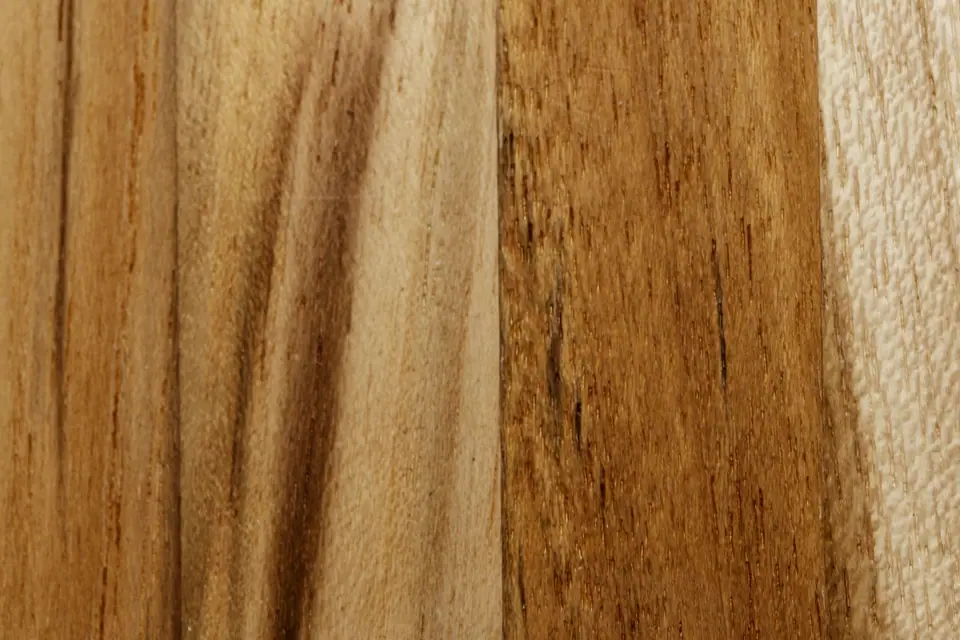
Ask three teak suppliers what "Grade A" means and you may get three answers. There is no single international standard for furniture-grade teak, so mills describe their own grades. This note explains the usual meaning of the three letters and how to avoid surprises.
Grade A
Grade A normally means heartwood: the darker, oil-rich centre of the log. Colour is even, the grain is tight and straight, and there are few or no knots. It is the grade used for tabletops, chair frames and anything outdoors, because heartwood resists moisture and insects best.
Grade B
Grade B allows some pale sapwood at the edges, small sound knots and moderate colour variation. After finishing, the differences are visible but not distracting. It is used for parts that are seen less often, such as the underside of tables, drawer boxes and the back panels of cabinets.
Grade C
Grade C has more sapwood, larger knots and strong colour changes. Used honestly, it suits rustic or painted pieces and hidden structure. Used as a visible surface in a plain-finish product, it will disappoint.
How to avoid misunderstandings
- Ask for a sample board in each grade, finished the way your product will be finished.
- Agree where each grade is allowed on the piece: top, frame, hidden parts.
- Agree what happens with colour variation between shipments. Teak is a natural material and the colour never repeats exactly.
This article is general information for the sample site. Lungguh Furniture is a fictional company.